
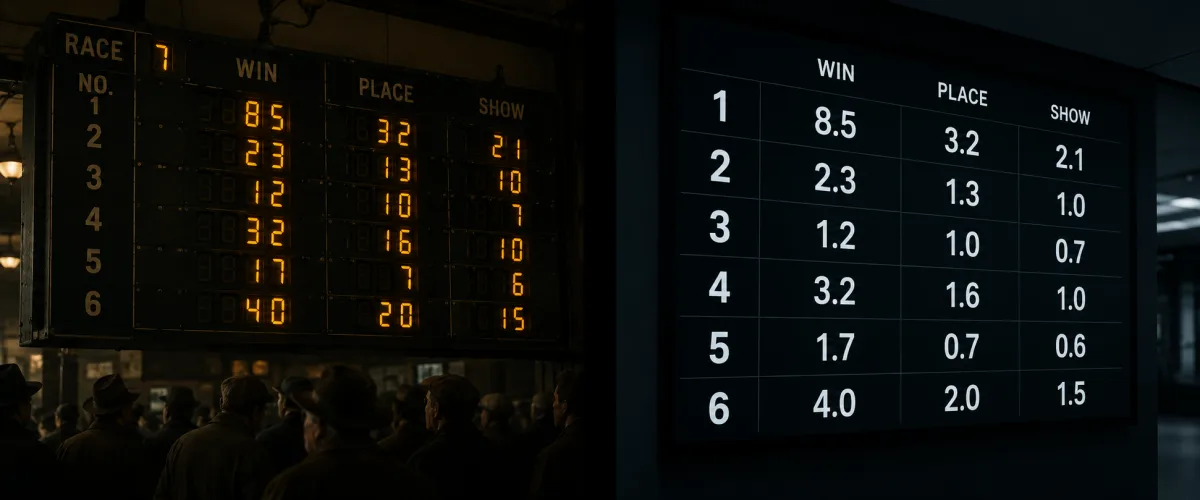
How Fixed Odds Work
With fixed odds, your payout is locked at the price you accept when placing the bet. If you take a horse at 8/1 and it wins, you receive 8/1 regardless of what the starting price becomes or how the market moves after your bet is placed.
The bookmaker sets the odds, builds in a margin (also called the overround or vigorish), and accepts the risk that the horse wins. This means the bookmaker is your counterparty: they lose when you win. That dynamic has direct consequences for serious bettors. Consistent winning creates a profit-and-loss liability for the book, which is one of the main reasons sharp bettors face stake limitations and account restrictions on fixed odds platforms.
Fixed odds pricing is driven by market intelligence, trading algorithms, and the bookmaker's assessment of true probability. Prices open early in the week for major races, then compress as information enters the market. The closing line is typically the most efficient point: the closer to post time, the harder it is to find a genuine overlay.
The Bookmaker Margin in Fixed Odds
The overround is built across all runners in a race. In a five-runner field, each runner's implied probability is inflated slightly above fair value. When you sum all the implied probabilities, the total exceeds 100%: the excess is the bookmaker's margin.
On competitive markets such as the Cheltenham Festival or Royal Ascot, margins at sharp offshore books can fall to 5-7%. On lesser races with fewer runners, the same book might apply 12-15%. Local monopoly operators and state-licensed books frequently run at 18-25% on standard races. That difference compounds over thousands of bets and is a primary reason experienced bettors seek out racebooks with better odds.